
Why POS System Failures Are Costing Supermarkets Revenue?
Jun 21, 2026In today’s highly competitive grocery retail environment, speed and reliability at the checkout are no longer optional—they are essential. Yet many supermarkets continue to suffer from POS system downtime cost, leading to significant financial losses, operational inefficiencies, and damaged customer trust.
Point-of-Sale (POS) systems are the backbone of modern retail operations. When they fail, even briefly, the ripple effects can be far more expensive than most retailers anticipate. This article explores how retail system failure, supermarket checkout problems, and POS reliability issues directly impact revenue—and what supermarkets can do to reduce risk through stronger retail loss prevention strategies.
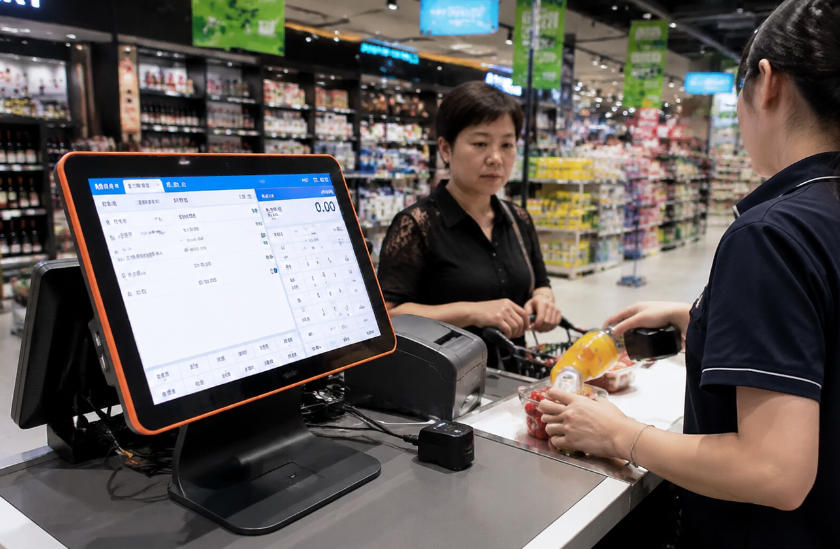
At first glance, a few minutes of system downtime may not seem critical. However, in a busy supermarket environment, every second counts.
When POS systems go offline, transactions stop completely. Customers are forced to wait, abandon purchases, or leave for competitors. This creates immediate revenue loss, but also hidden long-term costs:
Studies in retail operations consistently show that POS system downtime cost can range from hundreds to thousands of dollars per minute in high-traffic supermarkets.
A modern supermarket depends on integrated systems: inventory management, pricing databases, payment gateways, loyalty programs, and digital promotions—all connected through the POS.
When a retail system failure occurs, it rarely affects only the checkout counter. Instead, it can trigger a chain reaction:
Cashiers cannot process payments, including credit cards, mobile wallets, or loyalty points.
Products may not scan correctly, causing pricing errors or stock inconsistencies.
Long queues build quickly, especially during peak hours, leading to frustration and abandonment.
Employees are forced into manual processes, slowing operations and increasing error rates.
Even a short outage can severely disrupt store efficiency and reduce overall productivity for the entire day.
Customer experience is one of the most sensitive areas affected by POS instability. Modern shoppers expect fast, frictionless checkout processes. When they encounter supermarket checkout problems, frustration escalates quickly.
Common issues include:
These issues do more than slow transactions—they directly influence customer perception. A single negative checkout experience can lead to:
In retail, convenience is a competitive advantage. POS instability undermines that advantage instantly.
Many supermarkets still operate on legacy systems or poorly integrated POS infrastructure. This creates recurring POS reliability issues that are often predictable—but not always addressed.
Key technical causes include:
Old terminals struggle to handle modern software demands, especially cloud-based integrations.
POS systems depend heavily on stable internet connectivity. Even minor disruptions can halt transactions.
Unstable software releases or incompatible updates can lead to system crashes.
During peak hours, such as weekends or holidays, systems may fail under high transaction volume.
Without backup systems, a single point of failure can shut down an entire store’s checkout process.
Retailers that ignore these reliability concerns often face recurring disruptions that accumulate into significant annual revenue loss.
While retail loss prevention is often associated with theft and shrinkage, system failures represent a different but equally important form of loss.
POS instability can contribute to:
When systems fail, staff may rely on manual workarounds, increasing the risk of human error and financial leakage. In this sense, improving POS reliability is not just an IT priority—it is a core loss prevention strategy.
The financial consequences of ignoring POS instability go beyond immediate lost sales. Over time, supermarkets experience compounding damage:
In highly competitive retail markets, even small inefficiencies can determine whether customers choose your store or a competitor’s.
To minimize risk and improve reliability, supermarkets should adopt a proactive approach:
Cloud infrastructure improves scalability, real-time syncing, and remote monitoring.
Backup servers and offline transaction modes ensure continuity during outages.
Dedicated retail-grade internet connections reduce downtime risks.
Controlled update cycles prevent unexpected system conflicts.
AI-driven monitoring tools can detect anomalies before failures occur.
Employees should be trained to handle manual operations when necessary without losing control of transaction integrity.
POS systems are no longer just checkout tools—they are mission-critical infrastructure for modern supermarkets. As retail becomes more digital and customer expectations rise, POS system downtime cost becomes increasingly significant.
Failures in retail systems, recurring supermarket checkout problems, and unresolved POS reliability issues all contribute to lost revenue and weakened customer trust. At the same time, these failures directly undermine retail loss prevention efforts.
Supermarkets that invest in resilient, scalable, and well-monitored POS systems are not just improving operations—they are protecting revenue, reputation, and long-term competitiveness.
Tel / Whatsapp : +86 -15999943922
Email : nikki@aonpostech.com


© 2026 Shenzhen Aonpos Technology Co., Ltd .All Rights Reserved