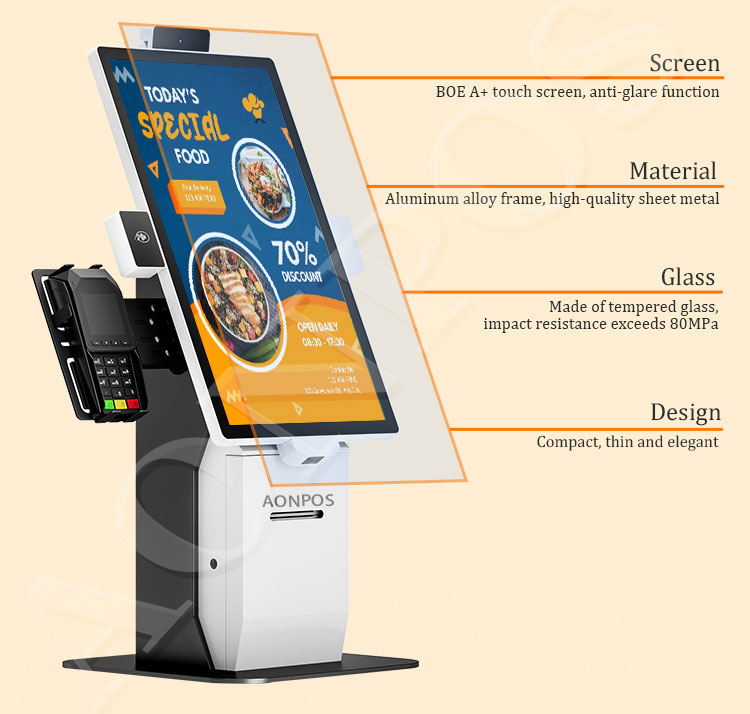
Can self-service machines be placed in places with high humidity, such as train stations or near the seaside?
Dec 26, 2025
The Ultimate Guide to Deploying Self-Service Kiosks in High-Humidity and Coastal Environments
For businesses expanding their digital footprint into high-traffic areas—such as bustling train stations or scenic seaside piers—the environment is the biggest hurdle to hardware longevity. High humidity, salt-laden air, and rapid temperature fluctuations can destroy standard electronics in months.
In this guide, we explore the technical requirements for deploying self-service payment kiosks in challenging climates and how to ensure your investment stands the test of time.
1. Understanding the Challenges: Humidity vs. Hardware
In environments like underground train stations or coastal boardwalks, humidity levels often exceed 80%. This leads to three primary hardware killers:
Electronic Corrosion: Moisture causes "creeping" corrosion on circuit boards, leading to intermittent failures or total system shorts.
Condensation & Dew Point: When warm, humid air hits a cool kiosk surface, condensation forms inside. This is particularly dangerous for thermal printers and card readers.
Saline Oxidation: For seaside locations, salt spray acts as a catalyst for rust, eating through standard powder-coated steel within a single season.
2. Essential Technical Standards for Humid Environments
To combat these issues, hardware must meet specific industrial benchmarks.
IP Ratings: The First Line of Defense
When selecting a kiosk, look for the Ingress Protection (IP) rating. For high-humidity indoor areas (train stations), an IP54 rating is often sufficient. However, for true outdoor or seaside deployment, IP65 or IP66 is mandatory. This ensures the unit is sealed against both micro-dust and high-pressure water jets (or heavy rain).
Material Science: Beyond Standard Steel
Standard kiosks use cold-rolled steel. For high-humidity areas, materials must be upgraded:
304/316 Stainless Steel: 316-grade is the "marine grade" standard, containing molybdenum to resist chloride (salt) corrosion.
Industrial Powder Coating: A multi-layer outdoor-grade coating provides an additional barrier against moisture.
3. Protecting the "Brain": Internal Climate Control
A high-quality self-service kiosk is more than just a metal box; it is a climate-controlled ecosystem.
Industrial Dehumidifiers/Heaters: Small internal heating elements keep the internal temperature slightly above the "dew point," preventing condensation from ever forming on the screen or motherboard.
Conformal Coating: Leading manufacturers like Aonpostech utilize conformal coating on PCBs. This is a specialized chemical film that waterproofs the electronic components themselves, providing a second layer of protection if moisture does enter the unit.
High-Brightness, Anti-Fog Displays: High-humidity often comes with high heat. Industrial screens with optical bonding prevent "fogging" between the glass layers and ensure visibility even in direct sunlight.
4. Maintenance Strategies for Coastal Deployments
Even the best-engineered kiosk requires a maintenance plan to combat the elements:
Salt Removal: In seaside locations, a monthly wipe-down with fresh water prevents salt crust from building up on ports and sensors.
Seal Audits: Every six months, inspect the rubber gaskets and seals. UV rays and humidity can cause seals to crack, compromising the IP rating.
Filter Checks: If the kiosk uses fan-based cooling, filters must be cleaned or replaced regularly to maintain airflow.
5. Why Choose Aonpostech for Challenging Environments?
At Aonpostech, we specialize in rugged, high-performance self-service payment kiosks designed for diverse global climates. Our kiosks are built with industrial-grade components that offer:
Multi-Payment Integration: Secure handling of cash, cards, and QR codes in any environment.
Customized Enclosures: Tailored material choices, from reinforced steel to marine-grade finishes.
Expert Engineering: Optimized thermal management systems to handle the humidity of a tropical station or the salt air of a coastal pier.
Deploying self-service technology in high-humidity areas is entirely possible with the right engineering. By prioritizing IP ratings, material quality, and internal climate control, you can provide 24/7 service to your customers, regardless of the weather.
Ready to deploy your next project in a challenging environment? Explore our full range of Self-Service Payment Kiosks and contact our technical team for a custom solution.