Unattended Payment Kiosk Systems: The Future of Automated Transactions
Mar 27, 2026Walk into a modern parking garage, hospital lobby, or transit station today, and you’ll notice a subtle but important shift—fewer lines, fewer counters, and far less waiting. In their place, unattended payment kiosk systems are reshaping how transactions happen.
For businesses, this isn’t just about adopting new technology. It’s about responding to changing customer expectations. People increasingly prefer speed, independence, and convenience. That’s why unattended payment kiosks for businesses are quickly moving from optional upgrades to essential infrastructure.
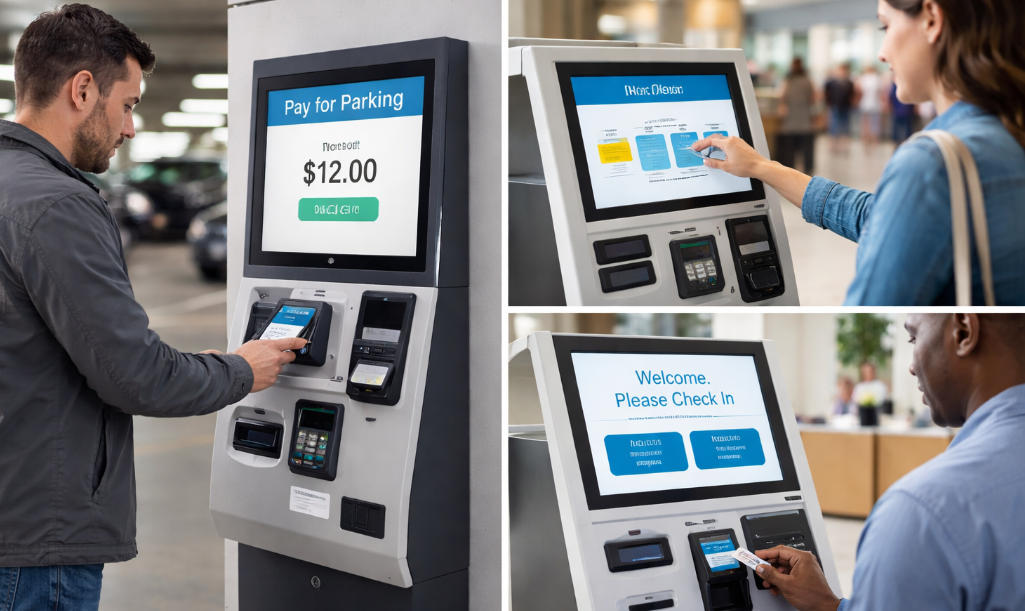
An unattended payment kiosk is a fully automated, self-service terminal that allows customers to complete transactions without staff assistance. Designed for ease of use, these kiosks guide users through each step—from selection to payment confirmation.
Behind the scenes, they combine several key components:
The result is a seamless experience that feels simple to the user but is highly sophisticated in operation. This is why self-service payment kiosk solutions are being rapidly adopted across industries.
To fully understand the value of unattended kiosks, it helps to compare them with traditional staffed payment systems.
Availability and Convenience
Traditional counters are limited by business hours and staff availability. Customers often face queues, especially during peak times. In contrast, kiosks provide 24/7 automated payment solutions, allowing users to complete transactions whenever it suits them—no waiting required.
Operational Efficiency
Staffed systems depend heavily on human performance, which can vary. Training, scheduling, and turnover all impact consistency. Automated payment kiosk systems standardize the process, ensuring every transaction follows the same efficient workflow.
Cost Structure
Traditional models require ongoing labor costs, including wages, training, and management. While kiosks involve upfront investment, they significantly reduce long-term operational expenses—making them a cost-effective alternative over time.
Accuracy and Reliability
Human error is inevitable in manual processes, whether in handling cash or entering data. Kiosks minimize these risks through automation, improving accuracy and reducing disputes.
Scalability
Expanding a traditional service operation often means hiring more staff and increasing space. With kiosks, scaling is as simple as deploying additional units—supporting scalable self-service kiosk infrastructure without major operational complexity.
This comparison clearly shows why many organizations are transitioning toward self-service kiosk vs traditional payment systems as a strategic upgrade rather than a simple replacement.
1. Always On, Always Available
Unattended kiosks operate around the clock, enabling businesses to serve customers beyond standard hours and capture more revenue opportunities.
2. Faster, Frictionless Experiences
Customers can complete transactions in seconds, without waiting in line or interacting with staff—an essential feature in today’s fast-paced environment.
3. Reduced Errors and Greater Consistency
By eliminating manual input, kiosks ensure transactions are accurate, repeatable, and easy to track.
4. Scalable Growth Without Added Complexity
Businesses can expand service capacity simply by adding more kiosks, making this a highly flexible solution for growing demand.
Unattended kiosk systems are highly adaptable and already play a critical role in multiple sectors:
Across these industries, the goal remains consistent: reduce friction while improving service delivery.
Automation is no longer just about efficiency—it’s about experience. Businesses that remove friction and give customers more control gain a clear competitive edge.
That’s where unattended kiosk payment technology stands out. In addition to processing transactions, these systems provide valuable insights through data collection and analytics, helping organizations refine operations and better understand customer behavior.
As labor costs continue to rise and digital expectations grow, the shift toward contactless self-service payment systems will only accelerate.
Unattended payment kiosks are not simply replacing traditional systems—they are redefining how businesses interact with customers, setting a new standard for speed, convenience, and scalability in modern commerce.
Tel / Whatsapp : +86 -15999943922
Email : nikki@aonpostech.com


© 2026 Shenzhen Aonpos Technology Co., Ltd .All Rights Reserved